We ask: Are manual processes HR’s biggest time thief?
Manual processes take time and money from HR departments. At Træfpunkt HR 2025, we looked at how small steps towards digitalization can give businesses back both time and reimbursement.
This article is from September 2025. Figures and circumstances may have changed since.
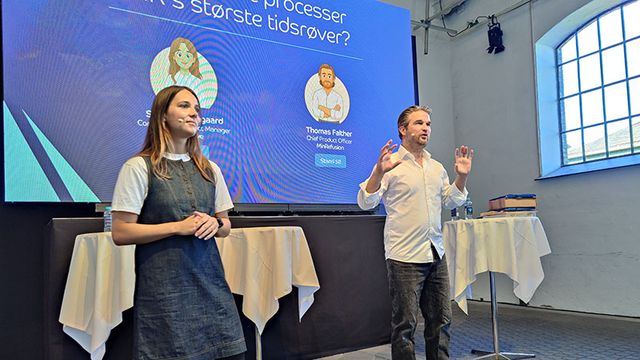
- Event
- Træfpunkt HR 2025
- Organizer
- Dansk HR
- Format
- Talk in Speakers Corner
Træfpunkt HR is a trade fair for HR professionals in Denmark, organized by Dansk HR (the Danish HR association). HR professionals, payroll staff and decision-makers meet there to be inspired, share knowledge and find new solutions to everyday challenges.
The fair covered everything from the latest HR tech trends to workshops on employee well-being, recruitment and leadership development. And in the middle of it all, we at MinRefusion had the chance to put the spotlight on a topic we think is more relevant than ever:
Are manual processes HR’s biggest time thief?
We took the stage in Speakers Corner – a format for short, focused talks – and put that exact question to the audience. The response was clear: many nodded in recognition. Everyone who works with HR and payroll knows how much time disappears into entering the same data twice, systems that do not talk to each other, and chasing absence information that should have been registered in one place.
And it is not just an everyday irritation. It is a time thief with serious consequences – both for the finances and for HR’s ability to focus on the work that really creates value.
“People in the HR team did not choose their careers because they love heavy, manual processes. They deserve time to be the drivers of culture who look after the organization’s values and well-being.”
When the canteen becomes HR’s most important information channel
We shared a number of real-life examples:
- Parental leave that is only discovered when a colleague in the canteen can no longer hide her growing belly.
- Outlook auto-replies that unintentionally become the organization’s “safety net” for finding out who is on long-term sick leave.
- Reimbursement that is lost because absence registration does not reach all the way to payroll.
- Tasks that only one specific employee can handle – and that therefore come to a halt when that person is ill or on holiday.
The examples may seem funny, but they point to a serious problem: every manual process is a time thief that slowly drains HR of resources and energy.
Time that is lost
Reimbursement that is not claimed costs money. But it is also about time. When HR spends hours copying data from one system to another or tracking down information through random channels, the chance to focus on what HR is there for disappears: people, well-being and development.
How does HR get its time back?
The solution does not start with tearing everything down and building it up again. It starts with three simple principles:
- Define clear roles and responsibilities – who registers, who approves, and when?
- Create transparency – with deadlines and fixed routines, so everyone knows when a task is done.
- Integrate the systems – HR, payroll and time registration systems must talk to each other. Otherwise the pile of manual workarounds keeps growing.
When one process is automated, time is freed up. And when time is given back to HR, energy is freed up for what really matters: well-being, leadership support and employee development.
Small steps – big effect
On the stage in Speakers Corner, we ended with a point that applies just as much outside the fair:
Start small. Take one process at a time. Once the first time thief has been dealt with, it becomes easier to keep going.
For every hour you free up from administration, you give an hour back to the organization.